What It Really Takes To Be a Changemaker In Rural India?
Rural India, home to over 60% of the population, is full of opportunities as well as challenges—from limited healthcare and education to gaps in livelihoods, infrastructure, and sustainability. For young people who wish to contribute meaningfully, stepping into this landscape is as much about learning and adapting as it is about creating impact.
This blog explores what it truly takes to grow into a changemaker, and how an experience like the SBI Youth for India Fellowship gives passionate youth the chance to immerse themselves in rural communities, build lifelong skills, and co-create solutions that last.
The Qualities of a Changemaker
To effect meaningful change in rural India, certain qualities are indispensable:
1. Empathy and Cultural Sensitivity
Empathy allows changemakers to design solutions that resonate with local needs, while cultural sensitivity ensures respect for traditions and values, fostering trust and collaboration. For instance, initiatives that involve community input, such as women’s leadership programs, succeed by aligning with local cultural contexts.
2. Action-Oriented Mindset
Changemakers move beyond identifying problems to implementing solutions, whether through grassroots projects or advocacy. The Changemakers Network emphasises that changemakers “act boldly and create solutions using available resources,” highlighting the importance of initiative.
3. Patience and Long-Term Vision
Rural development is a slow process, often requiring years to yield visible results. As noted by many NGOs partnering with the SBI Youth for India Fellowship, changemakers must recognise that change is gradual and remain committed to long-term goals.
4. Innovation and Adaptability
Changemakers must adapt to challenging environments, leveraging local assets or technologies like decentralised renewable energy to address issues like electricity access.
5. Leadership and Collaboration
Effective changemakers inspire and work alongside communities, NGOs, and local authorities. Leadership involves mobilising resources and people, while collaboration ensures solutions are sustainable and community-driven.
Key Areas of Focus
Changemakers in rural India target critical areas to create a holistic impact:
- Education: Enhancing learning through community libraries and digital literacy initiatives.
- Healthcare: Improving access with health camps, nutrition programs, and chronic disease management.
- Women’s Empowerment: Promoting gender equality via self-help groups and leadership training.
- Sustainable Livelihoods: Supporting agriculture, handicrafts, and micro-enterprises for economic stability.
- Infrastructure: Addressing gaps in electricity, water, and sanitation to unlock socio-economic progress.
- Alternative Energy: Advancing renewable energy solutions like solar and biomass for sustainability.
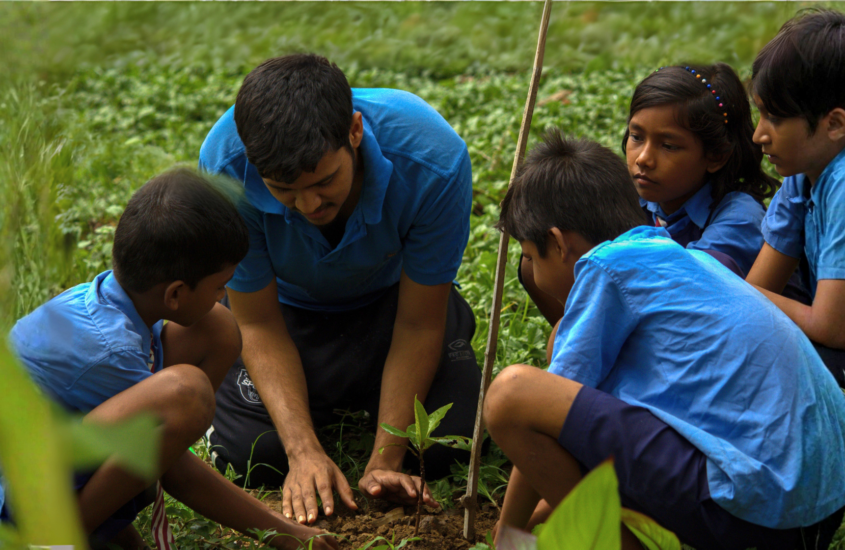
- Environmental Protection: Conserving ecosystems through mangrove restoration and seed banks.
- Food Security: Strengthening agriculture with sustainable farming and pest management.
- Traditional Crafts: Reviving cultural heritage for economic opportunities.
- Self-Governance: Building capacity in local organisations for community-led development.
- Social Entrepreneurship: Launching enterprises to address conservation and economic challenges.
- Water: Ensuring clean water access through watershed development and management.
- Technology: Harnessing both traditional and modern innovations that enhance accessibility, efficiency, and sustainability in rural communities.
These areas are interconnected, requiring changemakers to adopt holistic strategies that address multiple challenges simultaneously.
Support Systems for Changemakers
Changemakers rely on robust support systems to amplify their impact:
- Government Schemes: Initiatives like PMAY-G, which sanctioned over 48,000 houses in Nagaland, and MGNREGA offer vital support for housing and livelihoods. Changemakers can tap into these schemes to amplify impact.
- NGOs and Partnerships: 15 eminent NGOs bring deep grassroots expertise. Collaborating with local communities ensures solutions are sustainable and culturally aligned.
- Training and Mentorship: Programs like the 13-month SBI Youth for India Fellowship equip young professionals to drive change across sectors like education and health. With 710+ alumni impacting 250 villages, it shows how training builds effective changemakers.
Case Study: SBI Youth for India Fellowship
The SBI Youth for India Fellowship shows how structured support fuels changemaking. This 13-month program places young professionals with NGOs to lead grassroots projects. With an allocated stipend, accommodation, and mentorship, Fellows can focus fully on impact.
Initiatives like Yashu CK’s camel milk soap unit in Rajasthan and Eshaan Patheria’s solar micro-grid in Odisha are just a few examples that reflect the program’s broader spirit of innovation. Having impacted over 250,000 lives, the Fellowship proves how training and collaboration can scale change.
Conclusion
Being a changemaker in rural India demands empathy, action, patience, innovation, and adaptability. Youth involvement ensures a sustainable future for these efforts. If you wish to make a difference, applications for the SBI Youth for India Fellowship are now open. Application Link: https://register.youthforindia.org/